
II. Epidemiology
- Elderly (median age 70 years old)
- Those <65 years old with Multiple Myeloma represent only 15% of cases
- Incidence: 28,850 new cases per year in United States (2015)
- Deaths: 11,000 per year
- Twice as common in black persons
- More common in men
- Family History confers 2-4 fold increased risk (Autosomal Dominant trait)
- Associated conditions
- Associated with certain occupational exposures
- Farming Pesticides
- Petroleum workers
- Woodworkers
- Leather workers
- Ionizing radiation
III. Pathophysiology
- Malignant proliferation of Plasma Cells
- Overproduce monoclonal Protein
- Abnormal Immunoglobulin (IgG, IgM, IgA are most common)
- May also involve light chains (either kappa or lambda)
- Plasmacytoma may also form solitary plasma cell tumor
- On spectrum of plasma cell malignancy
- Spontaneous (de novo) onset in 80% of cases
- Monoclonal Gammopathy of Undetermined Significance (MGUS) in 20% of cases
- Progression to Multiple Myeloma at rate of 1% per year
- Smoldering Multiple Myeloma (SMM)
- Progression to Multiple Myeloma at rate of 10% per year for first five years (then decreases)
- Clinical Multiple Myeloma
- Plasma Cell Leukemia
- Risk Factors for progression from MGUS or SMM to Multiple Myeloma
IV. Symptoms
- Asymptomatic in 34% of cases (present with abnormal labs: Anemia, Proteinuria, Hypercalcemia)
- Back pain or bone pain (58%)
- Fatigue (32%)
- Pathologic Fracture (up to 34-40% of cases)
- Anorexia and weight loss (24%)
-
Paresthesias (5%)
- Wrist Pain (Carpal Tunnel related Neuropathy)
- Other presenting symptoms
V. Signs: Bone Findings
- Osteolytic lesions
- Pathologic Fractures
- Palpable swellings on accessible bones
- Location
- Sternum
- Skull
- Ribs
- Vertebrae (May result in Spinal Cord Compression)
VI. Differential Diagnosis: General
- Primary or metastatic cancer
- Benign bone lesions
- Vertebral Compression Fracture (Osteoporosis)
VII. Differential Diagnosis: Plasma Cell Peripheral Disorder
- Common
- Uncommon
- Waldenstrom Macroglobulinemia
- Amyloidosis
- B-Cell Non-Hodgkin Lymphoma
- Rare
- Plasmacytoma
- Plasma Cell Leukemia
VIII. Labs: Initial
- Comprehensive Metabolic Panel (including Serum Calcium, Serum Albumin and Protein, Renal Function tests, Electrolytes)
- Hypercalcemia
- Serum Calcium >10.1 mg/dl (present in 28%, Serum Calcium >11 mg/dl in 13% of patients)
- Renal Insufficiency
- Serum Creatinine >1.3 mg/dl (present in 48%, Creatinine >2 mg/dl in 23% of patients)
- Hypercalcemia
-
Complete Blood Count with Platelets
- Normochromic Normocytic Anemia
- Hemoglobin <12 grams/dl (present in 65-73% of patients)
- Anemia is nearly always present at one point for every patient
- Normochromic Normocytic Anemia
- Other initial tests to consider
- Thyroid Stimulating Hormone (TSH)
- Acute phase reactants (ESR, C-RP)
- Serum Vitamin B12
- Urinalysis
- Proteinuria (bence jones Proteins)
- Peripheral Smear
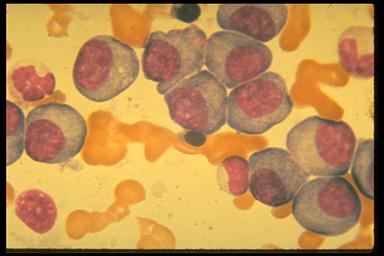
- Myeloma Cells
- Rouleaux of Red Blood Cells
IX. Labs: Confirmatory
- Serum Protein Electrophoresis and Urine Protein electrophoresis for Monoclonal Peak
- Immunofixation electrophoresis of serum and urine
- Serum quantitative Immunoglobulins
- 24 Hour Urine Protein
- Beta-2 microglobulin
- Lactate Dehydrogenase (LDH)
- Serum free light chain
X. Labs: Diagnosis - typically done in oncology
-
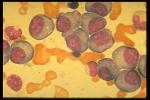
Bone Marrow Biopsy and aspirate (with cytogenetics, FISH, immunohistochemistry)
- Typically performed by oncology
XI. Imaging
-
Skeletal Survey (including Skull XRay)
- Recommended imaging for primary providers
- Classic "punched out" lytic lesions (66% of patients)
- Pathologic Fractures (26% of patients)
- PET/CT or whole body MRI
- Typically obtained in oncology
-
Bone Densitometry or DEXA (consider)
- Osteoporosis (23% of patients)
XII. Diagnosis: Multiple Myeloma
- Clonal Bone Marrow plasma cells >10% or biopsy proven bony or extramedullary Plasmacytoma AND
- Myeloma defining event (one or more, absence suggests smoldering Multiple Myeloma)
- Hypercalcemia
- Serum Calcium >11 mg/dl (or >1 mg/dl above upper range of normal)
- Renal Insufficiency
- Serum Creatinine >2 mg/dl (or GFR <40 ml/min)
- Anemia
- Hemoglobin <10 g/dl (or more than 2 g/dl below the lower limit of normal)
- Osteolytic Bone lesions
- Osteolytic lesions (one or more) on XRay, CT or PET/CT
- Hypercalcemia
XIII. Staging
- Systems
- International Staging (ISS)
- Standard staging system used most commonly (as of 2017)
- Revised International Staging (R-ISS)
- Better predictor of progression and survival than ISS (which it will likely replace)
- Durie-Salmon Staging
- International Staging (ISS)
- Stage I
- International Staging (ISS)
- Serum B2 Microglobulin <3.5 mg/L and Serum Albumin >= 3.5 g/dl
- Revised International Staging (R-ISS)
- ISS Stage I AND
- Normal Lactate Dehydrogenase (LDH)
- No high risk Chromosomes (e.g. del(17p), t(4;14), t(14:16))
- Durie-Salmon Staging
- Hemoglobin >10 g/dl
- Serum Calcium <12 mg/dl
- No bone disease or Plasmacytoma
- Serum paraprotein <5g/dl (IgG) or <3 g/dl (IgA)
- Urinary light chain excretion <4 g per 24 hours
- International Staging (ISS)
- Stage 2
- International Staging
- Serum B2 Microglobulin 3.5 to 5.5 mg/L
- Revised International Staging (R-ISS)
- Not R-ISS stage I or III
- Durie-Salmon Staging
- Not DSS stage I or III
- International Staging
- Stage 3
- International Staging
- Serum B2 Microglobulin >=5.5 mg/L
- Revised International Staging (R-ISS)
- ISS Stage III AND
- Increased Lactate Dehydrogenase (LDH) OR
- High risk Chromosomes (e.g. del(17p), t(4;14), t(14:16))
- Durie-Salmon Staging
- Hemoglobin <8.5 g/dl
- Serum Calcium >12 mg/dl
- Skeletal Survey with >2 lytic lesions
- Serum paraprotein >7 g/dl (IgG) or >5 g/dl (IgA)
- Urinary light chain excretion >12 g per 24 hours
- International Staging
XIV. Management: Combination Therapy
- Indication
- Symptomatic Multiple Myeloma
- Protocol 1: Otherwise physically healthy patients (previously limited to age <65 years)
- High dose myeloablative Chemotherapy (2-3 drug, historically included Vincristine, Doxorubicin), AND
- Autologous Stem Cell Transplant (ASCT)
- Protocol 2: Serious comorbidity (unable to tolerate marrow ablation and ASCT)
- Historically treated with Melphalan, Prednisolone, and in some cases Thalidomide
- See oncology references for current management protocols
- Other medications
- Newer Chemotherapy agents: Proteasome Inhibitors (monoclonal antibodies)
- Corticosteroids (Dexamethasone)
- Administered concurrently with Chemotherapy to reduce light chain renal load (Kidney injury risk)
- Efficacy
- ASCT increases median survival 12 months, and results in longterm survival 10% in some cases
- Palliative (Not curative)
- Relapse is common
XV. Management: Adjunctive
-
Bisphosphonates (IV Zoledronic acid or Pamidronate)
- All treated patients (regardless of bony lesions) to prevent Vertebral Fractures and other bony complications
- Vitamin D supplementation should also be given, and consider Calcium Supplementation with caution
- Terpos (2013) J Clin Oncol 31(18): 2347-57 [PubMed]
-
Venous Thromboembolism prophylaxis
- Reduces VTE Risk from 12-26% to 5-8% in Multiple Myeloma
- Indications
- Active treatment of Multiple Myeloma (esp. immunomodulatory agents)
- Continue for first 4-6 months after diagnosis (or until disease controlled)
- Options
- Low Molecular Weight Heparin (e.g. Lovenox)
- Warfarin (Coumadin) and target INR 2-3
- As an alternative, Aspirin alone may be considered for patients at very low risk
- References
- Prophylactic antibiotics
- First 3 months of treatment (some cases)
- Trimethoprim-sulfamethoxazole (Septra, Bactrim) OR
- Fluoroquinolone
- Recurrent pneumococcal infections
- Proteasome Inhibitor therapy
- Antivirals (prevent Varicella Zoster Virus reactivation)
- First 3 months of treatment (some cases)
- Immunizations (at least 2 weeks before or 1 month after ASCT)
-
Anemia management
- Erythropoiesis-stimulating agents (risk of thrombosis)
- Red Blood Cell Transfusion for Hemoglobin <7 g/dl
- Pain management
- Analgesics
- Neuropathy medications
- Physical Activity
XVI. Management: Monitoring
- Complication monitoring (see below)
- Weight loss
- Fatigue
- Bone pain
- Peripheral Neuropathy
- Venous Thromboembolism
- Infection
- Chemotherapy adverse effects and toxicity (e.g. Pancytopenia)
-
MGUS and SMM monitoring
- Scheduled monitoring of paraproteins and serum light chains
XVII. Complications
-
Immune Suppression
- Infection presenting complaint in 25% of patients
- Start empiric antibiotics for febrile illness
- See prevention below for Immunizations
-
Hypercalcemia
- Initial Management: Normal Saline Infusion with Corticosteroids
- Additional management in Refractory Cases: Furosemide, Bisphosphonates
-
Renal Failure
- Acute Kidney Injury is multifactorial (free light chains at proximal tubules, Hypercalcemia, Dehydration, nephrotoxicity)
- Treat Acute Kidney Injury with crystalloid (e.g. NS, at least 3 L/day)
- Dexamethasone is often given prophylactically with Chemotherapy to reduce light chain renal load
- Dialysis as indicated
- Neuropathy (Nerve infiltration by amyloid)
-
Anemia
- Results from Bone Marrow invasion
- Consider differential diagnosis for Anemia
- Often improves with Multiple Myeloma treatment
- Consider Erythropoietin or transfusion
- Invasive bone lesions (80-90%)
- Pathologic Fractures
- Bone pain
- Osteoporosis
- Hypercalcemia
-
Vertebral Fractures
- See Vertebral Fracture
- Intravenous Bisphosphonates (Pamidronate, Zoledronic acid)
- Continue indefinately
- Reduces fracture Incidence and pain
- Surgical Intervention: Percutaneous Vertebroplasty or Kyphoplasty
- Indicated in refractory cases
- Radiation Therapy
- Indicated for Spinal Cord Compression
-
Hyperviscosity Syndrome
- Findings: Fatigue, Headache, Visual disturbance, Retinopathy
- Treat with plasma exchange, antimyeloma Chemotherapy
XVIII. Monitoring
- Symptomatic improvement
- Decrease in M Component
XIX. Prognosis
- Invariably fatal but relates to staging
- Stage I: 62 Month median survival
- Stage 3: 29 Month median survival
- Treated patients live asymptomatically for years
- Five year survival was 45% in 2007 (compared with 30% in 1990)
- Median overall survival approaches 8 years with modern management (including monoclonal antibodies)
- Mortality from cause unrelated to Myeloma: 25%
XX. Resources
- Multiple Myeloma Research Web Server
- Cleveland Clinic Multiple Myeloma and Amyloidosis