
II. Physiology: Normal Response
- Sympathetic stimulation
- Dark lighting conditions
- Images
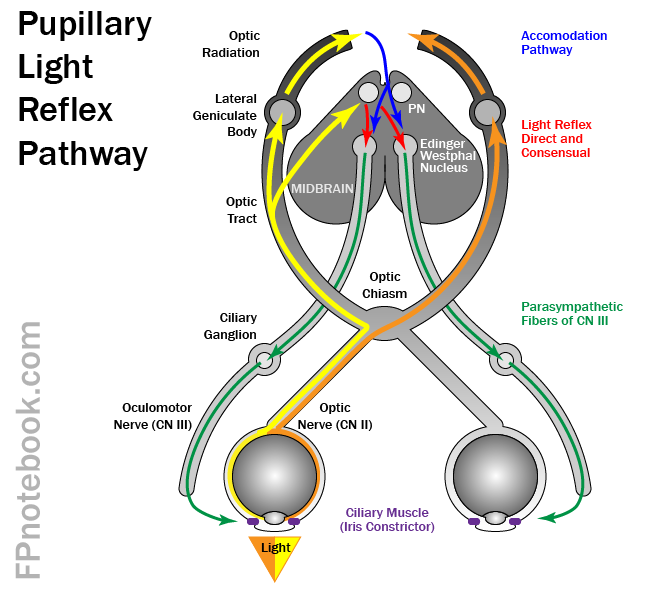

III. Causes: Bilateral Dilated Pupil
- Carbon Monoxide Poisoning
- Hallucinogens (Ketamine, PCP)
- Medications and toxins (Mnemonic: AAAS)
- Affects may be asymmetric (see unilateral causes below)
- Atropine
- Anticholinergic Toxicity (e.g. Antihistamines)
- Antidepressants (and Serotonin Syndrome)
- Sympathomimetics (Cocaine, Amphetamines)
IV. Causes: Unilateral Dilated Pupil
- See Also Anisocoria
-
Comatose patient with non-reactive dilated pupil (Blown Pupil)
- Indicative of Brainstem Herniation
- Alert patient
- Not due to Increased Intracranial Pressure
- Acute Glaucoma
- Cranial Nerve III compression or paralysis
- Posterior Communicating Artery aneurysm
- Compression of third nerve (parasympathetic fibers) along its course (e.g. Cavernous Sinus)
- Mydriatic drug (e.g. Atropine)
- See Bilateral dilated pupil causes above
- Cyclopentolate (Cyclogyl)
- Commonly used for dilated Eye Exam (duration 6 to 24 hours, up to 2 days in some cases)
- Scopolamine
- Often used for perioperative Nausea (may result in Mydriasis in first postoperative 1-2 days)
- Consider returning travelers who used Motion Sickness patch
- Touching patch and then eye may result in Mydriasis
- Phenylephrine nasal spray
- May traverse lacrimal duct with unilateral effects
- Nebulized Ipratropium Bromide (Duoneb)
- Ill fitting nebulizer mask result in Mydriasis (typically unilateral)
V. Causes: Dilated pupil does not constrict with Pilocarpine
- Local Eye Trauma
- Topical Anticholinergic Agent present in eye