Otolaryngology Book

http://www.fpnotebook.com/

Ear Anatomy

Aka: Ear Anatomy
Advertisement
  1. See Also
    1. Head and Neck Anatomy
  2. Components
    1. Vestibular Labyrinth
    2. Cochlea
    3. External Ear
    4. Tympanic Membrane
    5. Neurologic Anatomy of the Ear
  3. Anatomy
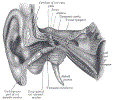
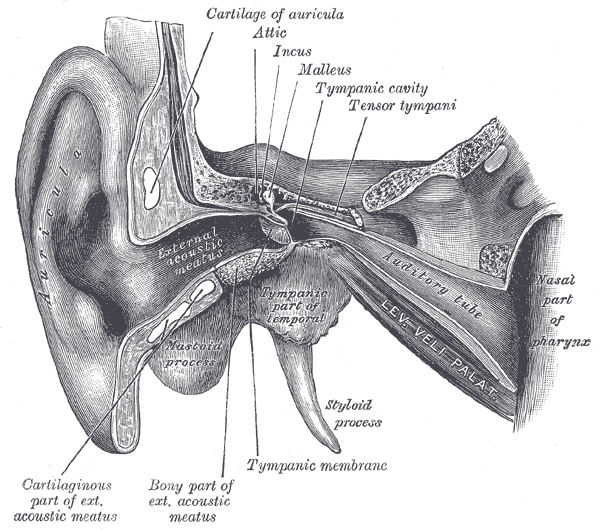
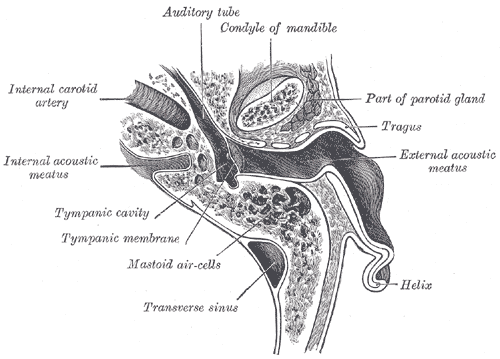
    1. Ear cross-sections
      1. entEarXsGrayBB907.gifLewis (1918) Gray's Anatomy 20th ed (in public domain at Yahoo or BartleBy)
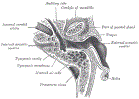
      2. entEarXsGrayBB908.gifLewis (1918) Gray's Anatomy 20th ed (in public domain at Yahoo or BartleBy)
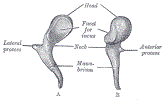
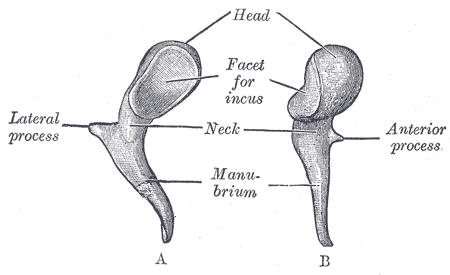
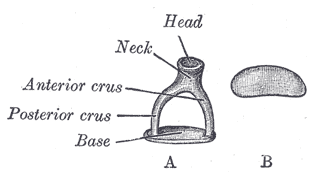
    2. Bone
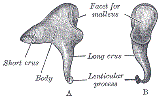
      1. entEarOssicleBoneMalleusLtGrayBB916.gifLewis (1918) Gray's Anatomy 20th ed (in public domain at Yahoo or BartleBy)
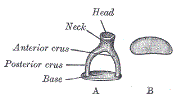
      2. entEarOssicleBoneIncusLtGrayBB917.gifLewis (1918) Gray's Anatomy 20th ed (in public domain at Yahoo or BartleBy)
      3. entEarOssicleBoneStapesLtGrayBB918.gifLewis (1918) Gray's Anatomy 20th ed (in public domain at Yahoo or BartleBy)
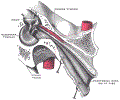
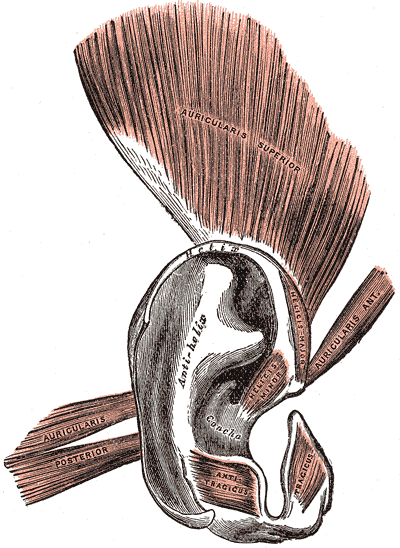
    3. Muscle
      1. entEarRegionMusclesGrayBB906.gifLewis (1918) Gray's Anatomy 20th ed (in public domain at Yahoo or BartleBy)
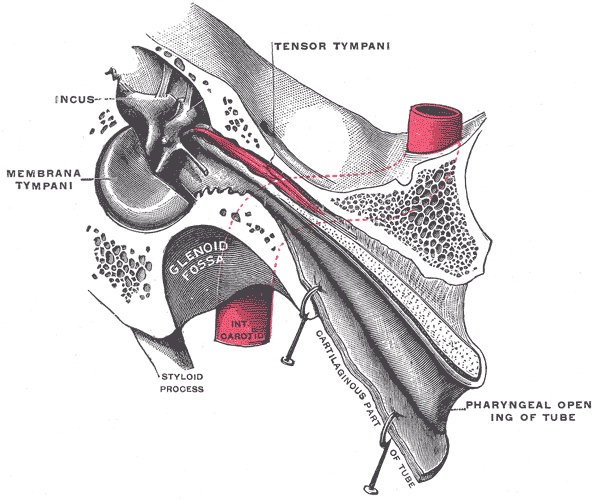
      2. entEarTensorTympaniMuscleGrayBB915.gifLewis (1918) Gray's Anatomy 20th ed (in public domain at Yahoo or BartleBy)

Ear structure (C0013443)

Definition (NCI) A sense organ needed for the detection of sound and for establishing balance. The outer ear consists of the auricle, the ear canal as well as the tympanic membrane. The middle ear is made up of an air-filled cavity behind the tympanic membrane that contains the ossicles (malleus, incus and stapes). The inner ear is made up of the cochlea needed for hearing and the vestibular apparatus required for balance.
Definition (NCI) A sense organ needed for the detection of sound and for establishing balance. The outer ear consists of the auricle, the ear canal as well as the tympanic membrane. The middle ear is made up of an air-filled cavity behind the tympanic membrane that contains the ossicles (malleus, incus and stapes). The inner ear is made up of the cochlea needed for hearing and the vestibular apparatus required for balance. (NCI)
Definition (CSP) organ of hearing and of equilibrium, consisting of the external ear, the middle ear, and the internal ear.
Definition (MSH) The hearing and equilibrium system of the body. It consists of three parts: the EXTERNAL EAR, the MIDDLE EAR, and the INNER EAR. Sound waves are transmitted through this organ where vibration is transduced to nerve signals that pass through the ACOUSTIC NERVE to the CENTRAL NERVOUS SYSTEM. The inner ear also contains the vestibular organ that maintains equilibrium by transducing signals to the VESTIBULAR NERVE.
Concepts Body Part, Organ, or Organ Component (T023)
MSH D004423
SnomedCT 117590005
HL7 EAR
English Ear, Vestibulocochlear organ, ear, Ears, hearing apparatus, Auris, Organum vestibulocochleare, EAR, ears, ear structure, ear structures, Ear structure (body structure), Ear-related structure, Ear structure, Ear (Anatomy), auris, Apparatus, Vestibulocochlear, System, Vestibulocochlear, Vestibulocochlear Apparatus, Vestibulocochlear System
Portuguese Orelhas, Ouvidos, Orelha, Ouvido, Sistema Vestibulococlear
French Organe de l'ouïe, Appareil auditif, Oreille, Système vestibulo-cochléaire, Système vestibulocochléaire
Swedish Öra
Czech ucho
Finnish Korva
Italian Sistema vestibolococleare, Apparato vestibolococleare, Orecchio
Russian UKHO, УХО
Croatian UHO
Latvian Auss
Polish Ucho, Uszy
Japanese みみ, 耳
Spanish estructura del oído (estructura corporal), estructura del oído, estructura relacionada con el oído, Oído, Oido, Oidos, Organo Vestibulococlear, Oídos, Órgano Vestibulococlear
German Ohr
Dutch Oor
Sources
Derived from the NIH UMLS (Unified Medical Language System)


Navigation Tree